
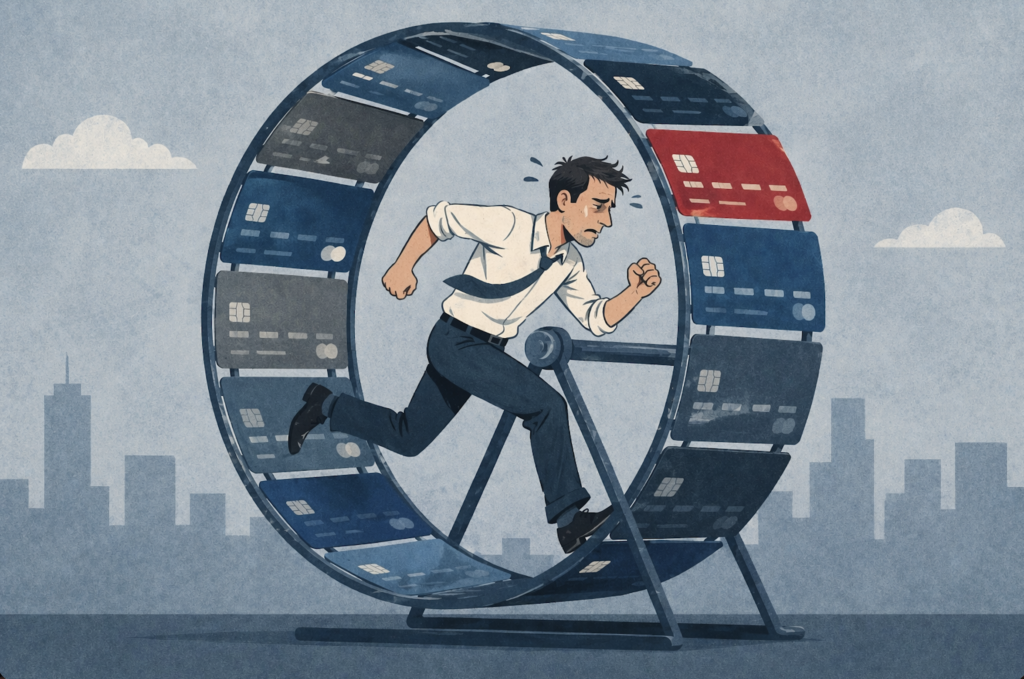
At some point, most people carrying serious credit card debt have the same thought. Maybe you’ve had it yourself. You’re staring at another minimum payment that barely dents the balance, and somewhere in the back of your mind a question surfaces that you’d never say out loud.
What if I just stopped?
It’s not as crazy of a thought as it might first seem. It’s what happens when someone has been doing everything right for months or years and still can’t see a way forward. The problem is, most of what’s written about this topic comes from banks, debt collectors, or personal finance bloggers who’ve never actually been in over their heads. So you get a lot of scare tactics and not a lot of straight answers.
This article is going to give you the straight answer. What actually happens, month by month, if you stop paying your credit cards. What your real options are. And what most people in this situation don’t find out until it’s too late to use the information.
No judgment. Just the truth.
The First 30 Days: Quieter Than You’d Expect
Here’s what most people get wrong about missing a credit card payment. They imagine something immediate and catastrophic. A door kicked in. An account frozen. Some kind of financial alarm going off.
The reality of the first 30 days is a lot quieter than that.
Your credit score will take a hit. That part’s real. A single missed payment can drop your score by 50 to 100 points depending on where you started, and it’ll stay on your credit report for seven years. That matters, and you shouldn’t ignore it.
But legally, at this stage? The creditor can’t do much. They’ll send a letter. Maybe call. They’re in “please come back” mode, not “we’re coming after you” mode. Some of them will actually reach out with hardship options or temporary payment plans during this window, especially if you’ve been a customer for a while.
Late fees get added. Interest keeps compounding on a balance you’re no longer paying down. The number goes up even though you’re not touching it. That part is genuinely painful. But the apocalypse most people expect in month one? It doesn’t show up.
Days 30 to 90: Things Start to Layer In
This is where the situation starts to feel more real. The calls get more frequent. Letters come more regularly. Your credit score has now absorbed multiple missed payment marks, and the damage is meaningful.
Credit bureaus track late payments in intervals. A 30 day late mark is bad. A 60 day late mark is worse. By the time you’re approaching 90 days, you’re looking at serious damage to your score that’ll be visible to any lender or landlord who pulls your credit.
The balance is also growing faster than most people realize. Interest doesn’t stop because you stopped paying. Neither do fees. What started as $8,000 in credit card debt can look very different after three months of compounding with no payments coming in.
Here’s something worth knowing though, and most people don’t find this out until later. Around the 60 to 90 day mark, some creditors will actually start making settlement offers. Not always, and not for every account type. But at this stage, they’re starting to do the math on whether they’d rather take something now or risk getting nothing at all. That shift in their thinking is important, and we’ll come back to it.
The 90 to 180 Day Window: The Moment That Matters Most
This is the part nobody talks about. And it’s actually the most important part of this whole article.
Somewhere between 120 and 180 days of missed payments, credit card companies typically charge off the account. That sounds terrifying. It isn’t what most people think it is.
A charge off is an accounting move. The credit card company is writing the debt off their books as a loss. It shows up on your credit report as a negative mark, and it absolutely affects your score. But here’s what it doesn’t mean: it doesn’t mean the debt is forgiven. You still owe it. The creditor either keeps trying to collect or, more commonly, sells the account to a debt collection agency for pennies on the dollar.
Now here’s the part that actually matters. This window, 90 to 180 days out, is when debt settlement becomes most accessible. The original creditor is motivated. They’ve been losing money on this account and they know it. They’d rather take 40 or 50 cents on the dollar now than sell it to a collector for 10 cents or spend years in court chasing a judgment.
Most people who stop paying feel like they’ve lost leverage at this point. The reality is often the opposite. This is when the negotiating window is widest. It closes as time goes on. But right here, in this uncomfortable middle stretch, there are real options available that weren’t available six months earlier.
What Debt Collectors Can and Can’t Do
Once an account gets sold to a collection agency, a lot of people panic. The calls change in tone. The letters look more threatening. It’s genuinely stressful.
What helps is knowing what collectors are actually allowed to do, because there are real legal limits. The Fair Debt Collection Practices Act, the FDCPA, spells them out clearly.
Collectors cannot threaten you with jail. Full stop. Debt is a civil matter, not a criminal one. If anyone ever implies otherwise, that’s an illegal threat and you can report them. They also can’t call before 8 a.m. or after 9 p.m. They can’t use abusive language. They can’t call your employer repeatedly or tell third parties about your debt.
What they can do: call you, send letters, and eventually pursue a civil lawsuit if the debt is large enough and they decide it’s worth the cost. If they get a court judgment against you, that opens the door to wage garnishment or bank levies. That’s a real consequence and it’s worth taking seriously.
But getting from “missed payments” to “wage garnishment” requires multiple steps, takes time, and creditors don’t pursue it for every account. They’re running a business. They go after the accounts where the math works in their favor.
There are also statutes of limitations on debt, which vary by state. After a certain number of years, creditors lose the ability to sue you to collect. The debt doesn’t disappear from your credit report on the same timeline, but the legal threat has an expiration date. Knowing your state’s rules matters here.
What This Does to Your Credit Score (The Honest Version)
We’re not going to sugarcoat this part. Stopping payments hurts your credit score. Significantly. If you start at a 700, you could realistically drop to the 500s over the course of several months of missed payments, charge-offs, and collections.
That matters. It can affect your ability to rent an apartment, get a car loan, and eventually a mortgage.
But here’s the question worth asking honestly: what does your credit score look like if you keep doing what you’re doing?
If you’re barely making minimums on a balance that isn’t going down, your score probably isn’t exactly soaring. And ten years from now, after paying thousands of dollars in interest just to stay in the same place, where does that leave you?
Settling a debt shows up on your credit report as “settled” rather than “paid in full.” That’s not the same as a perfect payment history. But credit scores recover over time. Most people who go through a legitimate debt settlement program and come out the other side with no balances see their scores start to rebound within a couple of years.
A damaged credit score is a short-term cost. Carrying $40,000 in credit card debt indefinitely is a long-term trap. Those are different problems with very different price tags.
Your Real Options From Here
If you’re already behind or seriously thinking about stopping payments, here’s an honest look at what’s actually in front of you.
Negotiate yourself. It’s possible. Creditors will sometimes settle directly with borrowers, especially around the 90 to 120 day window. The downside is you’re going in without knowing what they typically accept, and most people end up with worse deals than they could have gotten with help.
Do nothing and ride it out. Some people go this route. The statute of limitations eventually kicks in, and the debt does age off your credit report after seven years. This isn’t a strategy most people can live with, and the stress of collection calls and the risk of a lawsuit make it a rough few years. But it exists as an option and it’s worth knowing about.
Bankruptcy. For some situations, especially with very high balances or a combination of debt types, bankruptcy is the right answer. Chapter 7 or Chapter 13 each have very different implications. If you’re considering it, talk to a bankruptcy attorney, many offer free consultations. It’s not the automatic life-ruiner people think it is, but it’s also not something to do without getting real legal advice first.
Work with a debt settlement program. This is what makes the most sense for a lot of people carrying $15,000 or more in credit card debt. The way it works: a settlement company negotiates directly with your creditors to reduce the actual balance you owe, not just lower your interest rate or move debt around. You’re not taking out a new loan. You’re getting the number knocked down, then paying that off.
Programs like First Advantage work with people who have significant credit card debt and help them resolve it, often in 24 months or less. There are no new loans involved. The goal is an actual reduction, not a reorganization.
The Bottom Line
Stopping credit card payments isn’t a character flaw. It’s usually what happens when someone has been trying to do the right thing for a long time and the math just doesn’t work. The system is genuinely designed to keep you paying interest indefinitely. That’s not cynicism. That’s the business model.
The consequences of stopping payments are real. Your credit score takes damage. Collectors will call. There’s some legal risk if the balances are large enough. None of that is made up.
But here’s what’s also true: those consequences are survivable. They’re not permanent. And there are legitimate ways out of this situation that most people never hear about because the banks and credit card companies that profit from your monthly payments aren’t going to be the ones to tell you about them.
If you’re already behind, or seriously considering stopping payments, the most important thing you can do right now is understand what options are actually available to you before the best window closes.